Is CrossFit Good for Weight Loss?
CrossFit works for weight loss when paired with nutrition and consistency. Hook'd in Sandy Hook, CT explains what drives fat loss and why the scale lags.
Most people who walk into a CrossFit gym wanting to lose weight have tried something else first. A running streak. A gym membership that lasted until February. A diet that worked for six weeks. So the real question usually isn't whether CrossFit burns calories. It's whether this time will actually stick.
Here's the honest answer from a CrossFit gym in Sandy Hook: CrossFit is good for weight loss, but not for the reason most people think. The workouts help. What you eat and how consistently you show up help more.
Is CrossFit good for weight loss?
Yes, with a catch. CrossFit combines strength training and conditioning in the same class, which is a strong mix for changing body composition, meaning losing fat while keeping or building muscle. In a 12-week study of high-intensity functional training (the research term for CrossFit-style workouts), physically active adults who trained three times a week lost body fat and gained lean muscle, while a control group saw no change.1
The catch is that no workout, CrossFit included, can outwork your diet. In a review of cardio-only programs, six months of training without diet changes produced an average loss of about three and a half pounds.2 A Cochrane review of 43 trials found the same pattern for exercise in general: small losses on its own, and noticeably better results when paired with changes to what people ate.3
So CrossFit is a great tool. It just isn't the whole toolbox.
Why the scale might not move at first
This trips up a lot of new members. In that same 12-week study, participants lost body fat and added muscle, yet their total body weight didn't change in a meaningful way.1 Their bodies changed. The scale didn't notice.
That's normal, especially in your first couple of months. You're adding muscle while losing fat, and early on those two can roughly cancel out on the scale. Your jeans fit differently, your energy is better, the stairs feel easier, and the number stays stubborn.
That's why we'd rather track body fat and measurements than weight alone. If the scale is the only thing you're watching, you can talk yourself out of a program that's working.
Strength training is the part people skip
When people think "weight loss workout," they picture cardio: treadmills, spin class, long runs. Cardio has its place, but strength training does something cardio can't. When you eat less to lose weight, your body tends to lose some muscle along with the fat. Lifting gives your body a reason to hold onto that muscle.
A large 2022 review found that programs combining resistance training with a calorie deficit were the most effective at cutting body fat, while lean mass stayed roughly the same.4 In plain terms, you lose more of the weight you want to lose and less of the muscle you want to keep.
Every CrossFit class at Hook'd includes some form of strength work, from squats and deadlifts to presses and pulls, scaled to where you are right now. You don't have to build a lifting program yourself or guess what to do on a gym floor.
Consistency matters more than intensity
CrossFit has a reputation for intensity, and plenty of people assume the harder the workout, the faster the results. The research points somewhere less dramatic. A 2026 review of high-intensity functional training in adults carrying extra weight found that programs of 36 and 60 sessions produced meaningful changes in body composition, while 20-session programs didn't show a significant change.5 Thirty-six sessions is about three classes a week for three months.
That lines up with what we see. The members who change the most aren't the ones who crush every workout in week one. They're the ones still showing up in month four.
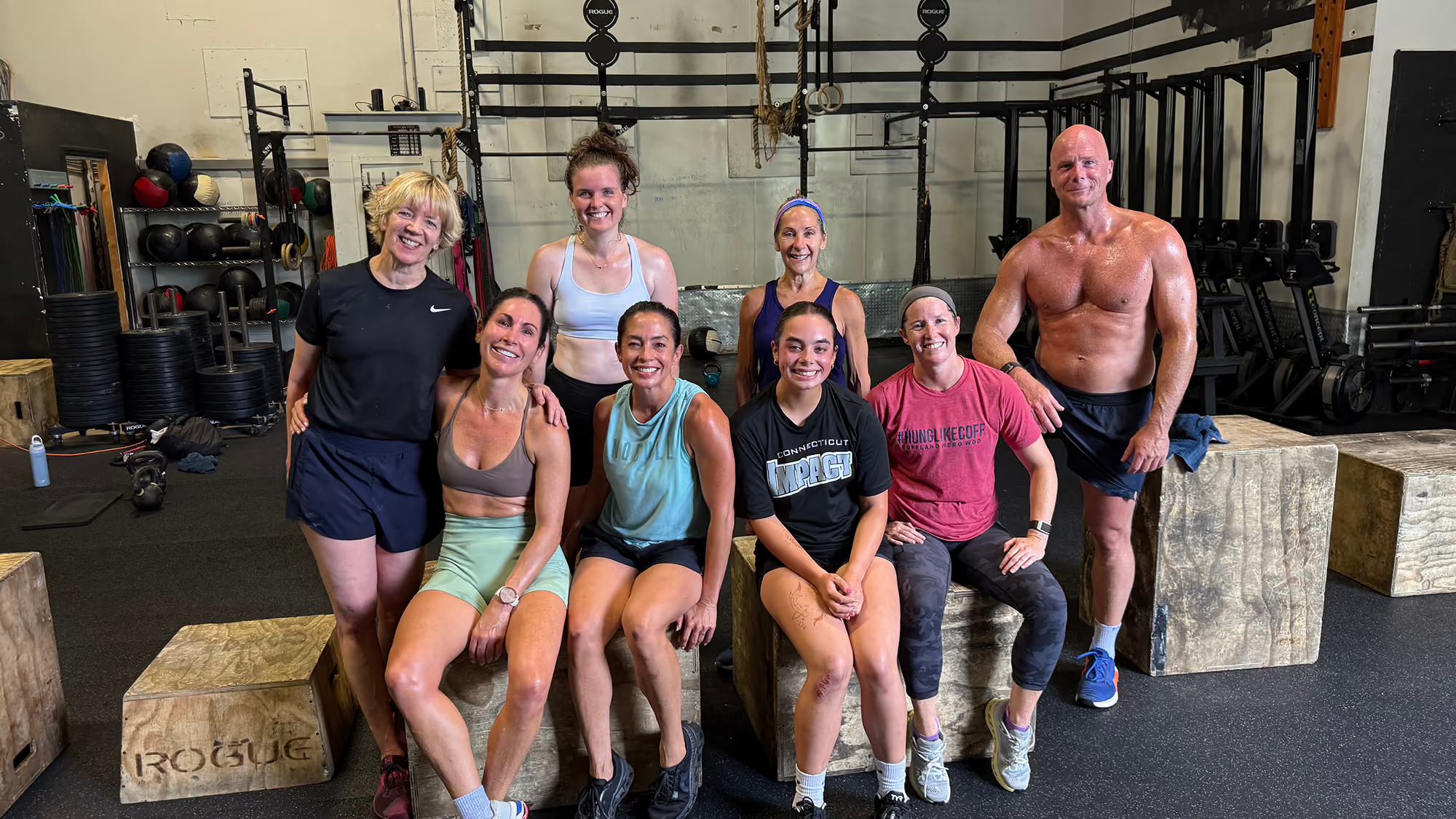
This is where a coached group class helps. Researchers have found that CrossFit members report a stronger sense of community than people at traditional gyms.6 Nobody has proven that community alone keeps people coming back, but anyone who's had a 6 a.m. crew ask where they were knows it doesn't hurt.
Nutrition is where results are made
If exercise alone produces modest results, food is the bigger lever. That doesn't mean a crash diet or cutting out everything you enjoy. Extreme approaches tend to fall apart around the same time motivation does.
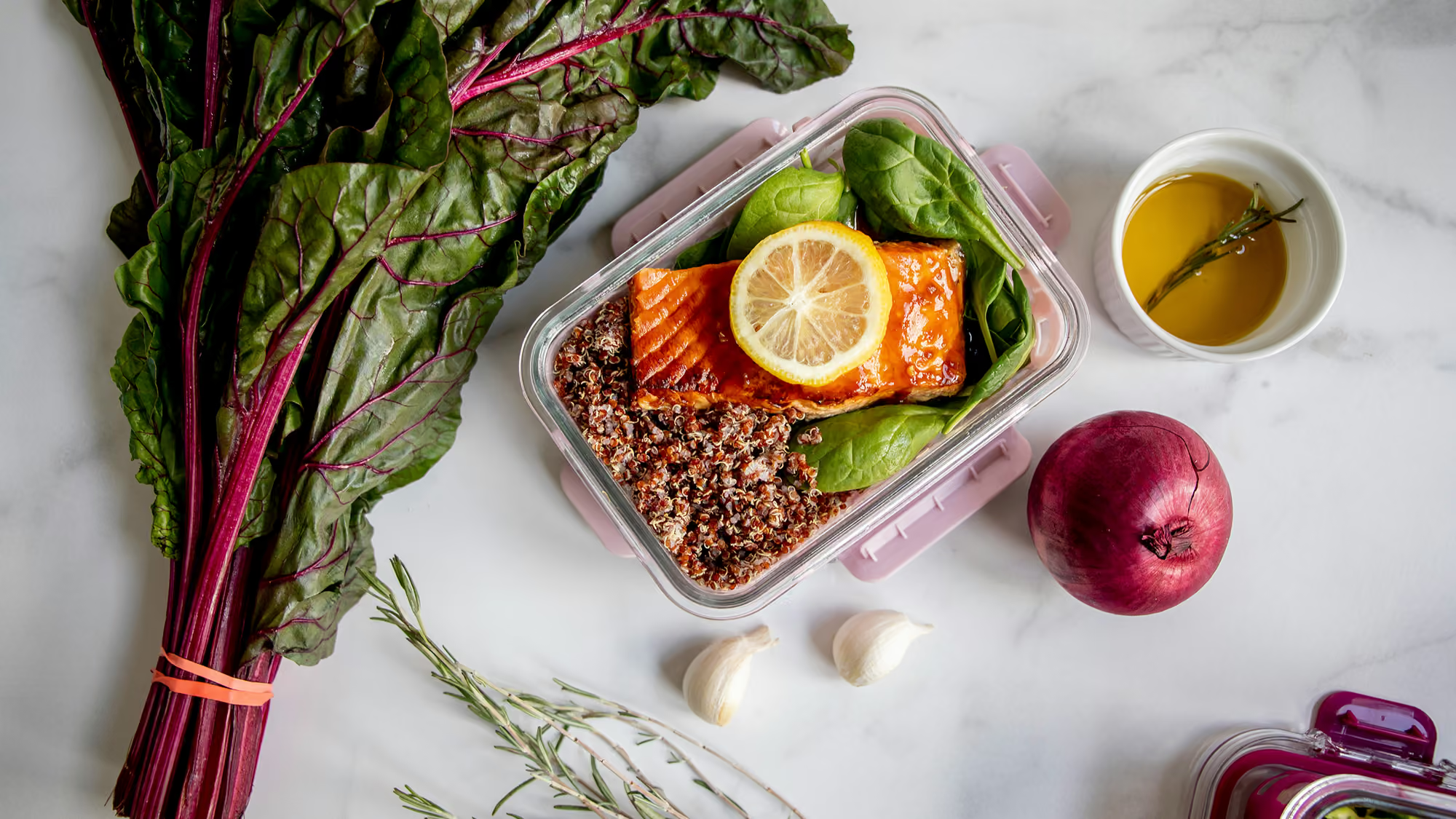
At Hook'd, nutrition coaching focuses on habits you can keep: simple meal templates, grocery lists, regular check-ins, and body fat and weight measurements so you can see what's actually changing. Tracking macros is an option, not a requirement. The goal is to eat in a way that supports your training and still fits a life with work, kids, and the occasional pizza night. Here's more on what nutrition coaching at Hook'd actually looks like.
What getting started looks like at Hook'd
Every new member starts with Fundamentals, a set of one-on-one sessions where a coach teaches you the core movements before you join group classes. That matters for weight loss more than you might think. Getting hurt in week two is the fastest way to stall, and learning to move well first is how you avoid it.
From there, most beginners do best with two or three classes a week (we break that down in how often you should do CrossFit as a beginner). Pair that with simple nutrition habits, give it a few months, and judge your progress by more than the scale.
Frequently asked questions
Can you lose weight doing CrossFit without dieting?
You can, but expect slower results. Studies on exercise alone show modest weight loss without changes to diet. CrossFit works best for weight loss when it's paired with consistent, sustainable nutrition habits.
How long does it take to see weight loss results from CrossFit?
Most people notice changes in energy and strength within a few weeks. Visible changes in body composition usually take two to three months of consistent training, around three classes a week, along with nutrition changes. The scale often lags behind how your clothes fit.
Does CrossFit help you lose belly fat?
CrossFit can help reduce overall body fat, including around your midsection. But you can't target fat loss to one area by training that area. Belly fat comes down as total body fat comes down, which depends on training, nutrition, and consistency together.
Is CrossFit better than cardio for weight loss?
For most people, a mix of strength and conditioning beats cardio alone, because strength training helps preserve muscle while you lose fat. CrossFit includes both in the same class. The best option is still the one you'll keep doing.
Is CrossFit safe for beginners who want to lose weight?
Yes, when it's coached and scaled. At Hook'd, every new member starts with one-on-one Fundamentals sessions, and every workout can be adjusted in weight, movement, and intensity to match your current fitness level.
Start with a plan you can keep
CrossFit won't do the work for you, and anyone promising fast weight loss from workouts alone is selling something. What it does give you is strength training, conditioning, coaching, and a group of people expecting to see you. Add food habits you can live with and enough months to let it work. If you're in Sandy Hook, Newtown, or nearby and ready to start, talk to a coach at Hook'd and we'll help you build a plan around your goals.
References
- Kapsis DP, Tsoukos A, Psarraki MP, Douda HT, Smilios I, Bogdanis GC. Changes in body composition and strength after 12 weeks of high-intensity functional training with two different loads in physically active men and women: a randomized controlled study. Sports. 2022;10(1):7. doi:10.3390/sports10010007
- Thorogood A, Mottillo S, Shimony A, et al. Isolated aerobic exercise and weight loss: a systematic review and meta-analysis of randomized controlled trials. Am J Med. 2011;124(8):747-755.
- Shaw K, Gennat H, O'Rourke P, Del Mar C. Exercise for overweight or obesity. Cochrane Database Syst Rev. 2006;(4):CD003817.
- Lopez P, et al. Resistance training effectiveness on body composition and body weight outcomes in individuals with overweight and obesity across the lifespan: a systematic review and meta-analysis. Obes Rev. 2022;23(5):e13428. doi:10.1111/obr.13428
- Du Q, Wang Z, Lu X, Li Y. High-intensity functional training effects on body composition and glucose-lipid metabolism among adults with overweight and obesity: a meta-analysis of randomised controlled trials. Sci Sports. 2026;41(5-6):381-392. doi:10.1016/j.scispo.2026.01.007
- Whiteman-Sandland J, Hawkins J, Clayton D. The role of social capital and community belongingness for exercise adherence: an exploratory study of the CrossFit gym model. J Health Psychol. 2018;23(12):1545-1556.