Starting CrossFit in Your 40s and 50s: An Honest Guide
Thinking about CrossFit later in life? A Newtown coach explains why it's safe, how to start smart, and what to expect when you begin CrossFit in your 40s, 50s, or beyond.
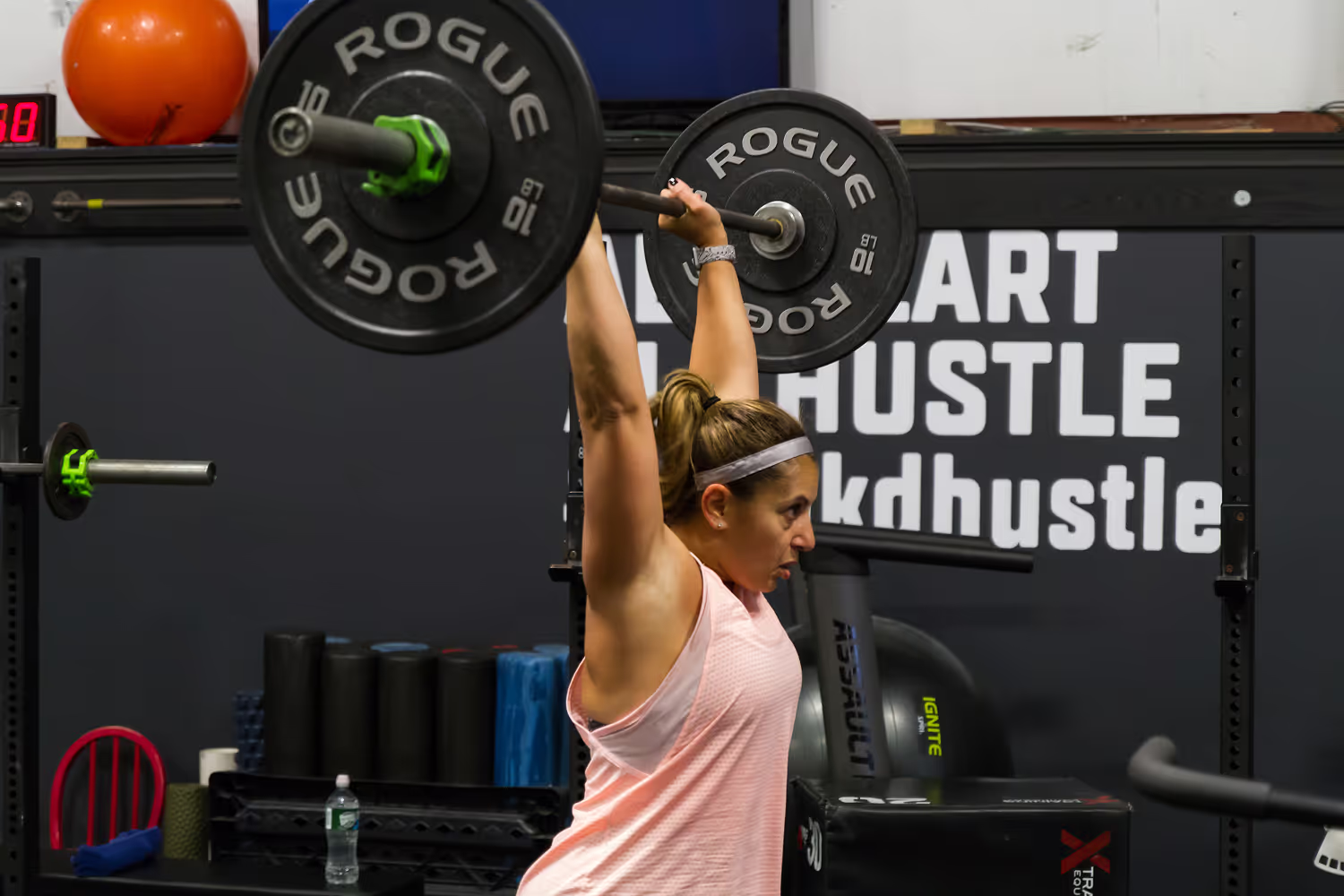
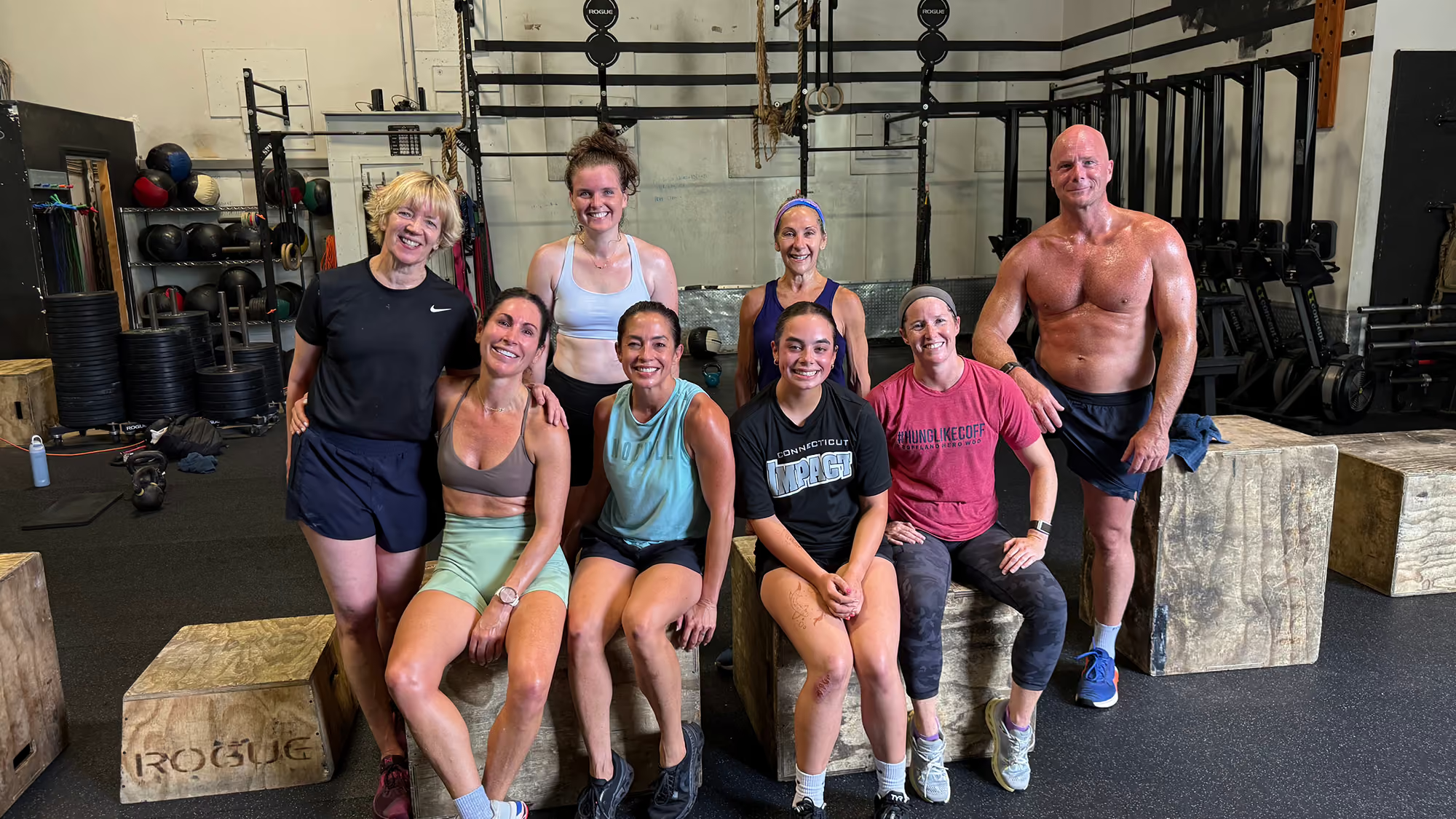
If you're in your 40s or 50s and you've been quietly wondering whether CrossFit is still an option for you — the honest answer is yes, and you might be surprised how good a fit it is. Some of the most consistent, strongest members at our Sandy Hook gym started later in life, not earlier.
This isn't a "you can do anything!" pep talk. It's a straight look at what's true, what's different, and how to start the smart way.
Is CrossFit safe after 40?
Yes — when it's coached and scaled to you. The risk people worry about doesn't come from CrossFit itself; it comes from doing too much too soon with no guidance. In a coach-led class, the weight, the movements, and the intensity are all adjusted to where your body is today. You progress at your pace, not a 25-year-old's.
The bigger risk for most people over 40 isn't training — it's not training, and slowly losing strength, balance, and mobility year after year. Strength training is one of the most protective things you can do as you age.
Why your 40s and 50s are a great time to start
By this point, you usually know what you actually want: to feel strong, move without aches, keep up with your kids or grandkids, and stay independent for the long haul. CrossFit is built for exactly that. It trains the things that matter most as you age:
- Strength — which protects bones, joints, and metabolism
- Balance and coordination — which protect you from falls down the road
- Conditioning — for energy and heart health
- Mobility — so everyday movement stays easy
And because it's done in a group with a coach, you get the accountability and community that make you actually keep showing up — which is the part that delivers results.
What's actually different when you start later
We won't pretend nothing changes with age. A few things are simply worth respecting:
- Recovery takes a little longer. Rest days aren't optional — they're where the progress happens.
- Warm-ups matter more. A good class builds this in for you.
- Progress is steady, not instant. The goal is durability, not chasing a max lift in week two.
- Old injuries get respected, not ignored. A good coach programs around them.
None of this is a barrier. It's just the difference between training smart and training like you're 22. Smart wins, at any age.
How to start CrossFit the smart way
Here's the simple version:
- Start with an intro, not a max-effort class. Begin with a conversation and a chance to learn the foundational movements before you're thrown into the deep end.
- Train a few days a week, with rest between. Three solid, well-coached sessions beats six rushed ones — especially early on.
- Scale everything, and be okay with it. Scaling isn't the beginner version; it's the smart version. Everyone scales something.
- Tell your coach your history. Bad knee, cranky shoulder, recent surgery — the more they know, the better they can program for you.
- Prioritize sleep and recovery. They're not the boring part of fitness — they're half of it.
What to expect in your first few weeks
You'll feel some good soreness — proof you did something new. You'll learn movements you've never tried, and you'll be surprised how quickly they start to click. You probably won't love every workout, but you'll likely notice you're sleeping better, moving easier, and walking out feeling more capable than when you walked in. Most people are hooked by the time the early soreness fades and the first small wins show up.
Frequently asked questions
Is it too late to start CrossFit at 50?
No. People start in their 50s, 60s, and beyond. Because every workout is scaled to you, the only real requirement is showing up and letting a coach guide your progression.
How many days a week should I do CrossFit as a beginner over 40?
For most people starting out, two to three coach-led sessions a week with rest days in between is a great, sustainable place to begin. You can build from there as your body adapts.
Do I need to be in shape before I start?
No. Getting in shape is the reason to start. Your first sessions meet you exactly where you are.
What if I have an old injury?
Tell your coach. Movements and loads can be modified around most past injuries, and a good coach will program with them in mind from day one.
Ready to start — on your terms?
At Hook'd Athletic Co. in Sandy Hook, starting later in life is something we do well, because we coach every workout and scale it to the person in front of us. Your first step is a free intro session: a low-key conversation with a coach about your goals, your history, and the right way to ease in. Book your intro session and start strong, smart, and at your own pace.